

Blog · Laughter Therapy
Eight Laughter Therapy exercises for groups, sorted by goal: waking up the body, freeing the voice, spreading laughter and closing the session. With steps, group size, timing and how to adapt them.
By José Eduardo, Red Lúdica facilitator · 6-minute read · October 2026
Before you start
Laughter comes more easily with a warmed-up body and a group at ease. The order matters.
What do you want it for?
To wake a group up, start with the body. To bring it together, with the voice and games in pairs.
How many of you are there?
Six people is enough for a laughing group. With more than thirty, it helps to have someone guiding and music playing.
How much time is there?
An exercise lasts five to fifteen minutes. Three well-chosen ones fill half an hour.
The exercises
They come from the sessions we facilitate. Wear comfortable clothes and, if possible, use music.
1
To reach laughter with your body awake.
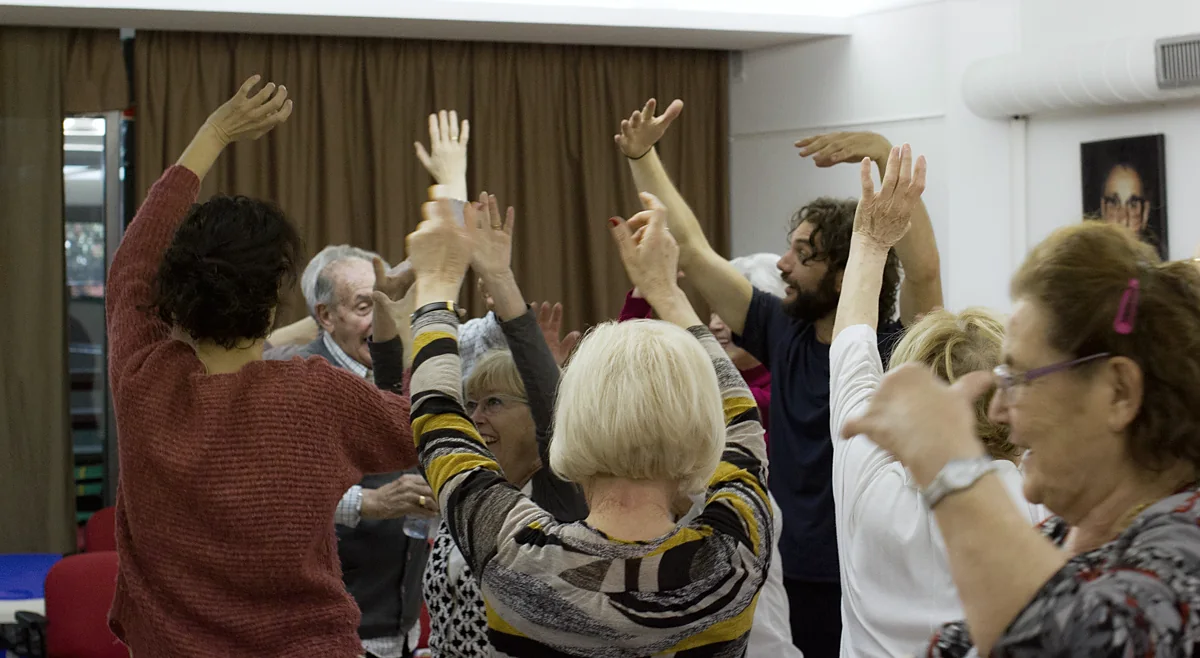
The group moves around the room and the guide changes the instruction: like monkeys, like robots, like someone running late.
Any size · 5–10 min · Music
The key: exaggeration is the rule. “Running late” usually comes naturally.
In pairs, each person tries to touch the other’s shoulder with their index finger while dodging theirs.
In pairs · 5 min · No materials
The key: gentle touches and a new partner every minute.
2
So laughter finds a way out.
Each person says their full name; then only the vowels; finally only the consonants.
Up to 20 people · 10 min · No materials
The key: the consonant round is the one that sets off the laughter.
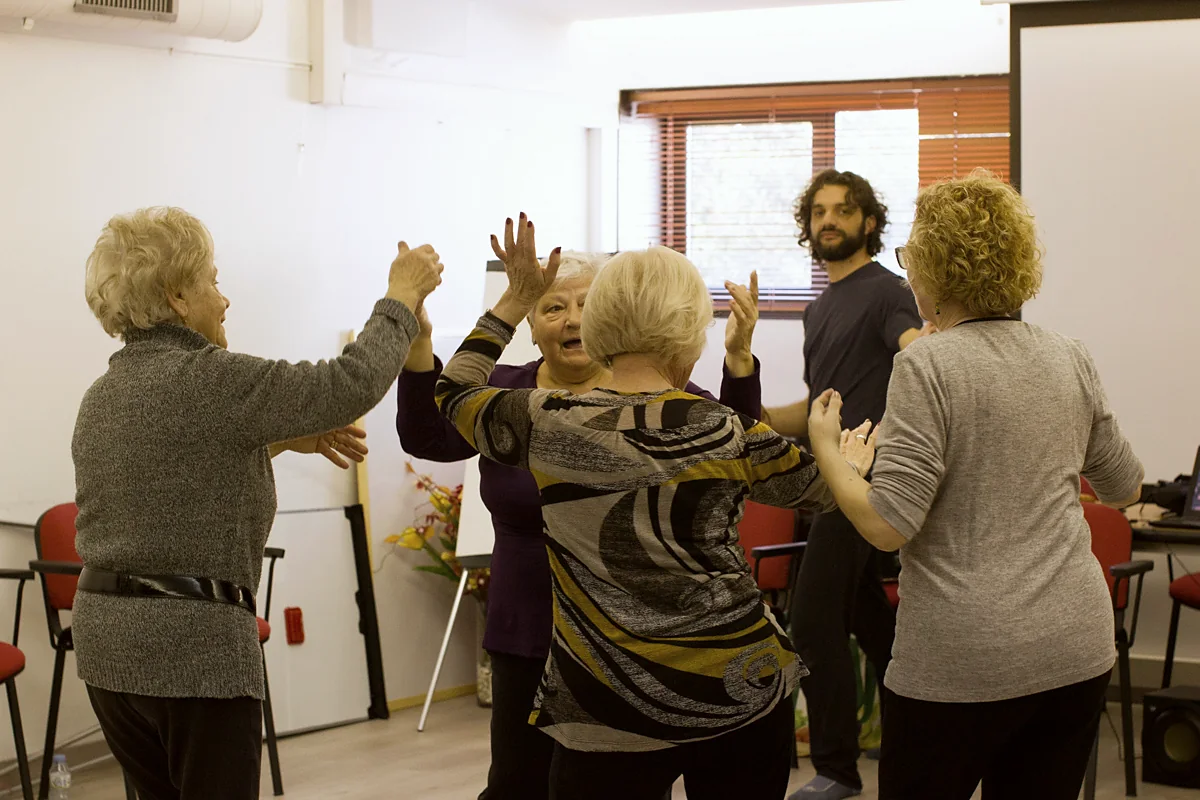
In a circle, the group laughs on each vowel: ha, he, hi, ho, hu. The leader sets the volume and rhythm with their hands.
Any size · 5–10 min · No materials
The key: laughter starts as an exercise and spreads until it’s real.
3
So laughter passes from one person to another.
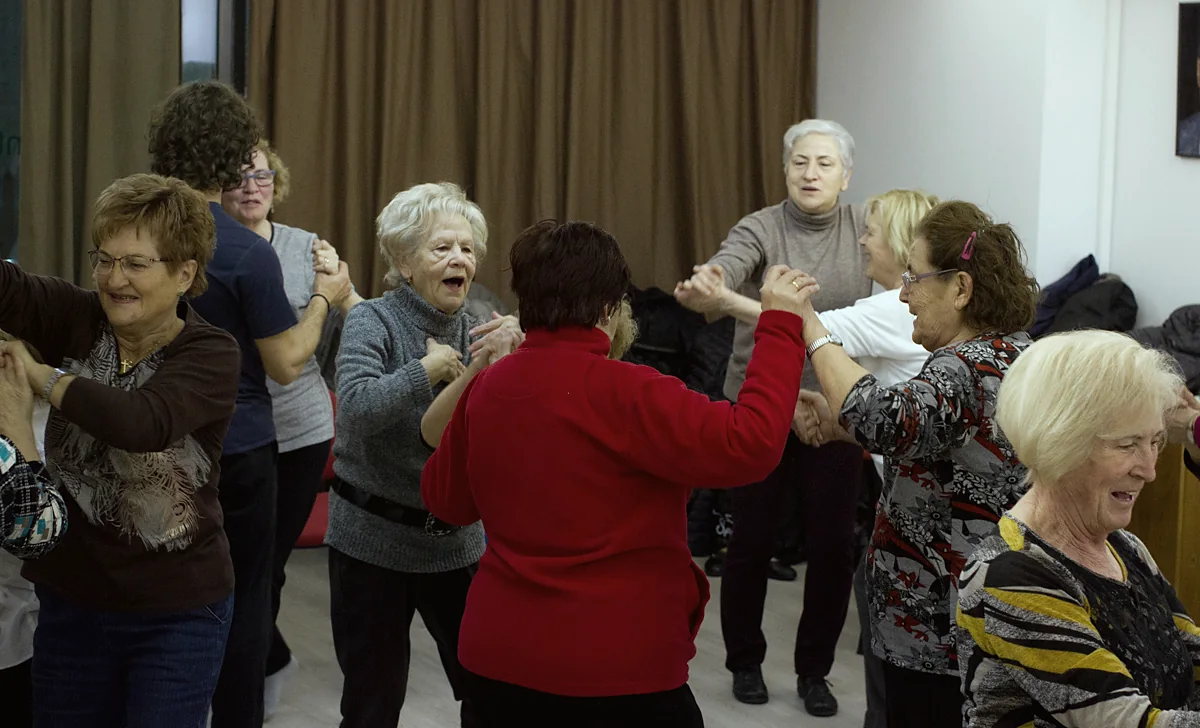
Two lines form a corridor. Each person walks down it following the instruction: in a hurry, shyly, like a film star.
10 to 40 people · 10–15 min · Music
The key: the corridor always applauds. Walking through to applause changes anyone’s face.
In pairs, one person says a syllable and the other answers with the first one that comes to mind. Then with two, three and five syllables.
In pairs · 5–10 min · No materials
The key: speed over sense: the made-up words are the ones that work.
4
To slow down and gather what was experienced.
Standing or seated, each person rubs their hands and massages their head, neck and shoulders while letting their voice out.
Any size · 5 min · Soft music
The key: sighing out loud is allowed. And recommended.
In a circle, each person says in one word how they’re leaving. The group listens and says thanks.
Up to 30 people · 5–10 min · No materials
The key: one word is enough. Anyone who’d rather pass, passes.
For whoever leads them
Laughter Therapy works when the group feels safe to play.
In a workshop we link these exercises with music, rhythm and care for the group, so all you have to do is play.
See a guided workshop → What Laughter Therapy is and how it works →1
Voluntary participation
Everyone joins in at their own pace.
2
Laugh with others
The group’s humour looks after every person in it.
3
Warm up first
First the body and voice; then the laughter.
4
Adapt to each person
Standing or seated, and in a gentle version if someone has a condition.
5
It’s a complement
Treatments are set by health professionals.
FAQ
From list to workshop
A Laughter Therapy Workshop tailored to the group, with music and someone to guide.
✓
Thank you for telling us about your group. We’ll reply within 24 working hours with a tailored proposal.
Want to share more details or would you rather talk?
Three steps, one minute
We’ll help you shape the experience around your needs.