

Articles · Older people
Twelve play, music and laughter activities for care homes, day centres and community groups, organised by moment in the session. All can be done seated, with adaptations for each group and free printable guides.
By José Eduardo, Red Lúdica facilitator · 14-minute read · November 2026
Before you start
Every group of older people is different. Before choosing activities, answer these.
What is the group like?
If most people use a wheelchair or have limited mobility, start with voice, face and hands. If there is energy, add dancing and the stage.
Is there cognitive impairment?
Choose copying games and familiar music, with few instructions. Repeating the same games every week builds confidence.
How much time do you have?
With 30 minutes, one activity per moment. With 45 or 60, two per moment and breaks for a drink of water.
The activities
Two featured activities per moment and one more in the guides. Each guide includes preparation, steps and adaptations for wheelchair users, cognitive impairment and hearing loss.
1
Greet each other, wake up the body and ease into play.
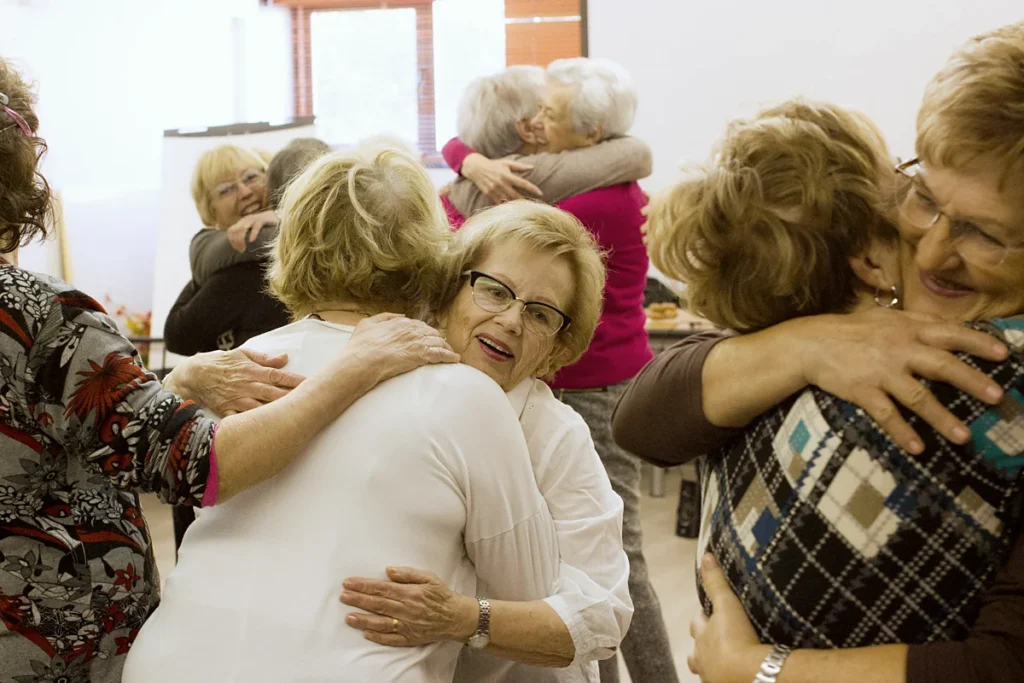
Sitting in a circle, each person says their name and greets the group in their own way: a wave, a wink or a bow. The whole group greets them back at once.
6 to 25 people · 10 min · No materials
The key: the group returns every greeting with energy. Everyone should feel welcome from the very first minute.
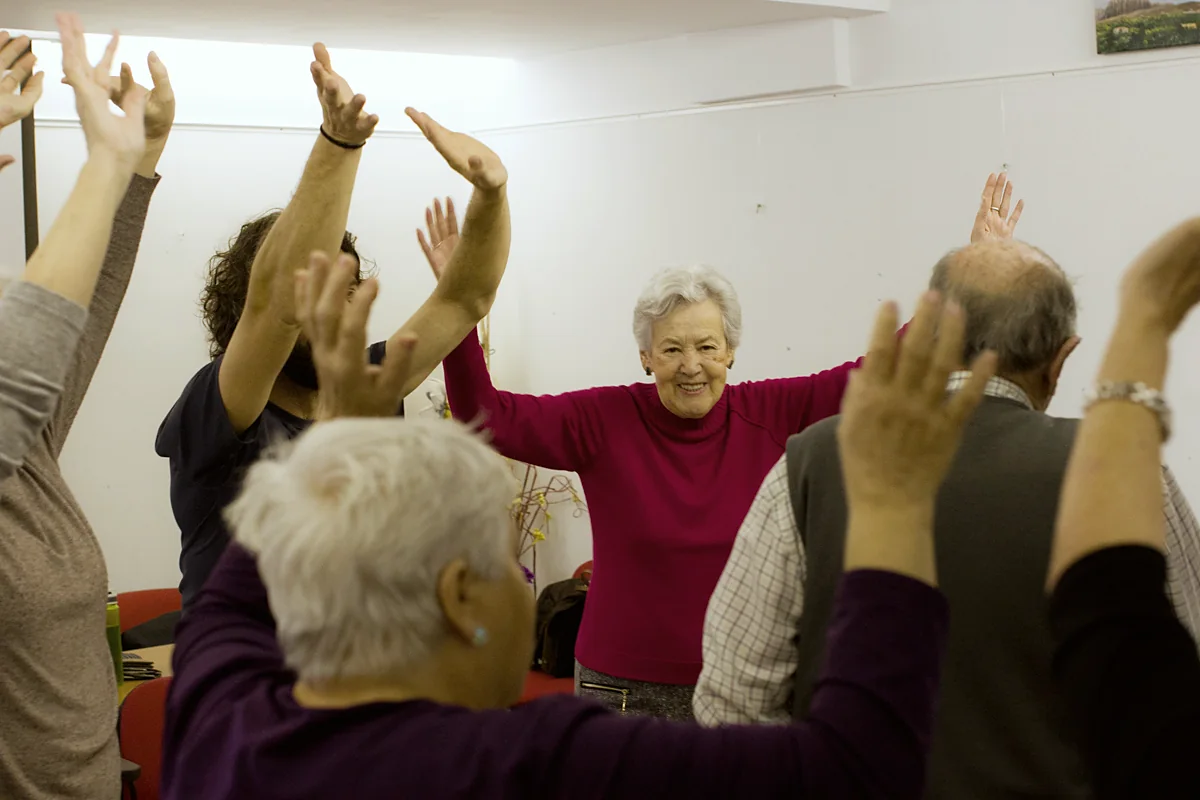
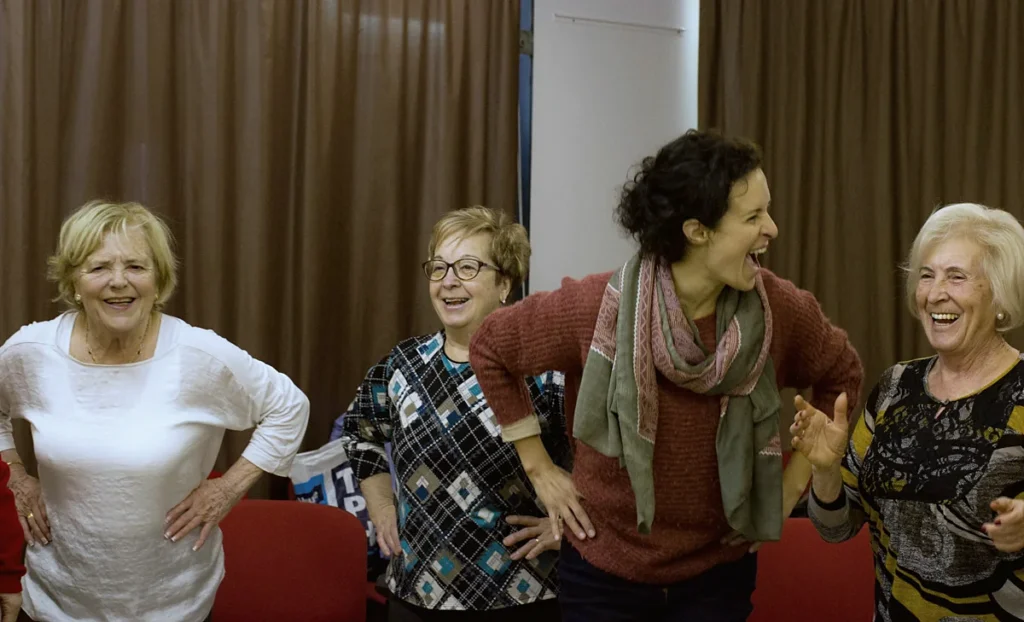
Seated, the group stretches as if getting up in the morning: arms up, hands shaken out, a big yawn and a gentle massage of the face and shoulders.
6 to 30 people · 10 min · Stable chairs
The key: each person only moves what feels comfortable. Invite, never correct.
2
Music, clapping and vowels: what works best with almost any group.
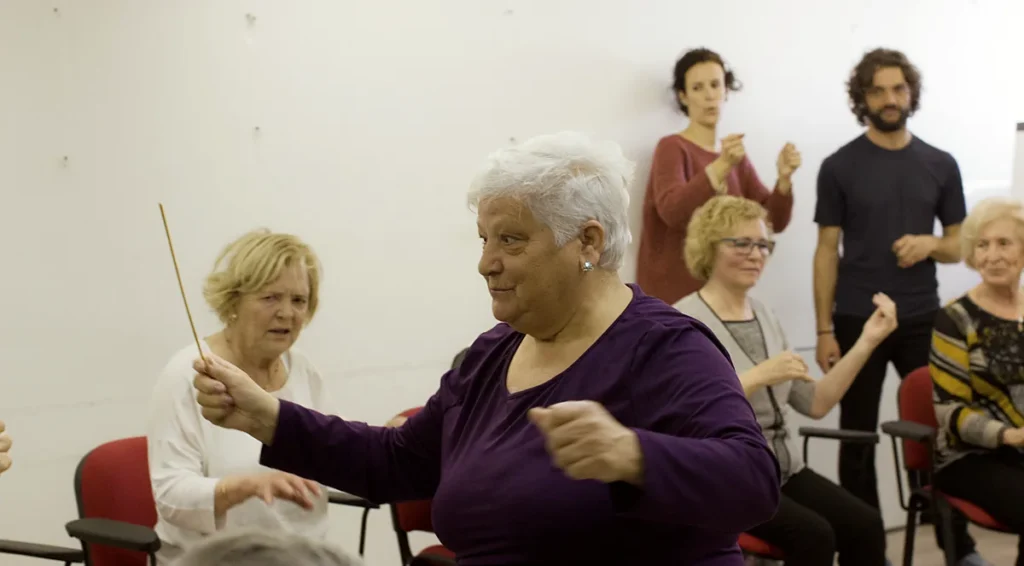
One person takes the baton and conducts a familiar piece of music; the group follows by clapping, tapping their feet or patting their knees. Then the baton passes to someone else.
6 to 30 people · 15 min · A baton and music
The key: whoever holds the baton is in charge. Being the conductor for a minute lifts anyone’s spirits.
The group sings a very well-known song using only one vowel: first A, then E, I, O and U. With I and U, laughter is guaranteed.
6 to 40 people · 10 min · Vowel cards
The key: choose a song everyone knows. The words disappear, leaving the melody… and the laughter.
3
Imagination and small surprises so laughter appears on its own.
In a circle, the group passes round an object that doesn’t exist and keeps changing: a hot potato, an ice cube, a feather or something very sticky.
6 to 25 people · 15 min · Object cards
The key: exaggerate. The hotter the potato, the more the group laughs.
Everyone has a scarf. At each clap, the scarf turns into something else: a hat, a moustache, a superhero cape or a fan.
6 to 30 people · 15 min · One scarf per person
The key: there are no wrong answers. Any invented use counts and deserves a round of applause.
4
A warm ending that makes people look forward to next week.
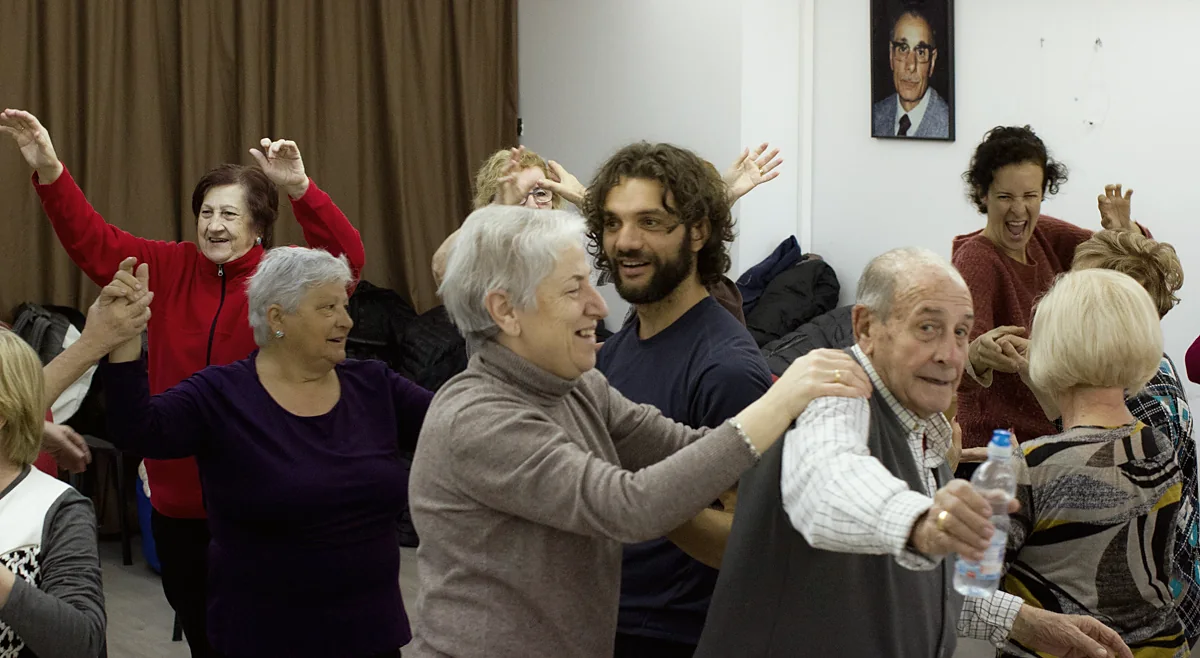
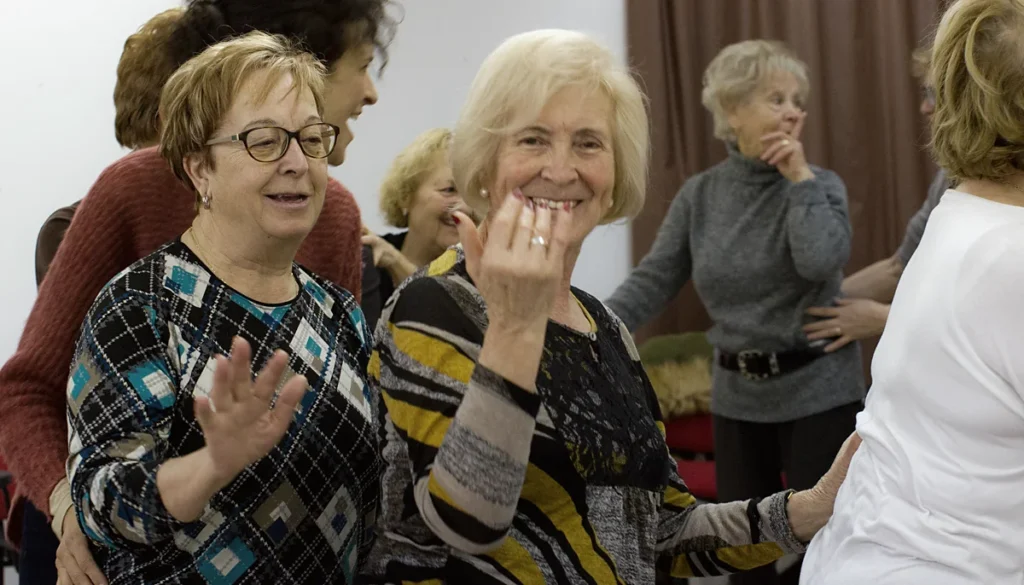
To cheerful music, each pair holds hands and dances seated: swaying, clapping and changing partners when the music stops.
6 to 30 people · 15 min · Music
The key: holding hands. For many people, it’s the most looked-forward-to moment of the session.
Whoever wants to steps onto the “stage” with a toy instrument or a pretend microphone, and the group applauds them like a star.
6 to 25 people · 15 min · Toy instruments
The key: the applause is for everyone who takes the stage, however they do it.
For the session leader
A session with older people works when everyone takes part at their own pace and feels welcome.
All 12 guides, a 45-minute session plan and every material in large print: face, vowel and object cards, a song list and a session log. PDF in A4.
Download the guides (PDF) → See our Laughter Therapy workshop for older people →1
Talk to the staff first
Ask about the group’s mobility, hearing and health. The care team knows each person.
2
Invite, never insist
Watching is taking part too. Many people join in at the second or third session.
3
Get down to their level
Sit in the circle, face people, speak slowly and use big gestures.
4
Laugh with, never at
No jokes about age, memory or bodies. The laughter comes from the play.
5
Breaks and water
Take short breaks, keep water handy and stop if anyone gets tired or dizzy.
FAQ
If you’d rather someone came in
A Laughter Therapy workshop for older people, adapted to the group and led by experienced facilitators. Standing or seated, everyone at their own pace.
✓
Thank you for telling us about your group. We’ll reply within 24 working hours with a tailored proposal.
Want to share more details or would you rather talk?
Three steps, one minute
We’ll help you shape the experience around your needs.