

Red Lúdica guide

What Laughter Therapy is and how it works

Laughter Therapy is a group practice that uses play and laughter to release tension, lift the mood and bring people closer.

L

Laughter

A physical and social response: it appears mostly in company.

P

Play

A free activity, with its own rules and the pleasure of playing as its goal.

L

Lúdica

Anything to do with play. From the Latin “ludus”, game.

1964

the scientific study of laughter begins

1994

first hospital clowns in Spain

1995

laughter yoga is born

−32%

cortisol after laughing (2023)

Group of people standing, laughing and applauding in a bright room

In short

A practice of well-being in a group

What it is

A set of techniques that aim to trigger laughter and make the most of its effects on body and mood.

How it works

With games, movement, breathing and group exercises. Laughter starts as an exercise and spreads until it’s real, like a yawn in the four o’clock meeting.

What it’s used for

To release stress, improve a group’s atmosphere and share a good time.

Group in a circle smiling during a workshop

Its place

A well-being complement

Laughter Therapy complements medicine and psychology. Any treatment is always decided by a health professional.

See what science says →

Where it comes from

Almost a century taking laughter seriously

1872

Charles Darwin describes laughter in humans and apes in “The Expression of the Emotions”.

1900

The philosopher Henri Bergson publishes “Laughter”: laughing is a social gesture.

1938

Johan Huizinga publishes “Homo Ludens”: play comes before culture and goes with it.

1958

Roger Caillois sorts games into four families: competition, chance, make-believe and vertigo.

1964

William Fry starts the scientific study of laughter at Stanford: gelotology.

1964

The journalist Norman Cousins falls ill and adds comedy films to his treatment.

1971

Patch Adams qualifies as a doctor and opens a free home-hospital where humour is part of care.

1976

Cousins tells his story in “The New England Journal of Medicine”. The book follows in 1979.

1986

Michael Christensen founds the Big Apple Circus Clown Care Unit in New York.

1994

La Sonrisa Médica, Spain’s first hospital clown association, is founded in Palma.

1995

The doctor Madan Kataria gathers five people in a park in Mumbai: laughter yoga is born.

1998

The film “Patch Adams”, starring Robin Williams, brings the idea to a wide audience.

2000

Robert Provine publishes “Laughter”: we laugh about thirty times more in company than alone.

2009

Stuart Brown publishes “Play”: playing is a biological need in adult life too.

2012

Robin Dunbar, at Oxford, finds that pain is better tolerated after laughing in a group and attributes it to endorphins.

2023

A meta-analysis in PLOS ONE: cortisol drops by an average of 32% after laughter sessions.

2018

Five organisations found the Spanish Federation of Hospital Clowns.

2024

The UN celebrates the first International Day of Play, on 11 June.

May

Every first Sunday in May is World Laughter Day, which began in 1998.

Three key figures

The patient, the doctor and the psychiatrist of play

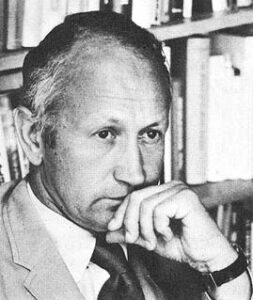
Norman Cousins, journalist and author of Anatomy of an Illness

The patient

Norman Cousins

1915–1990

Editor of “Saturday Review”. In 1964, with a serious collagen disease and severe pain, he agreed with his doctor to add high-dose vitamin C and Marx Brothers films to his treatment. He said ten minutes of laughter gave him two hours of pain-free sleep.

The caveat

It’s the account of a single patient, with no control group. Its value was in opening the debate and encouraging research.

N Engl J Med, 1976 ↗

Photo: Wikimedia Commons, public domain.

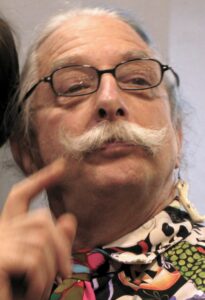
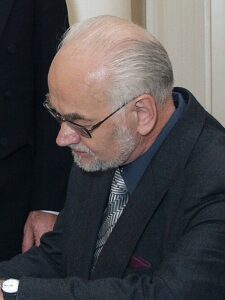
Patch Adams at a medical conference in 2008

The doctor

Patch Adams

Born in 1945

Hunter Doherty “Patch” Adams, a doctor since 1971. He turned his home into a free hospital where humour and play were part of care, and in 1989 he set up the Gesundheit! Institute in West Virginia. Every year he travels with volunteers dressed as clowns to hospitals and orphanages around the world.

The film

“Patch Adams” (1998), starring Robin Williams, took more than 200 million dollars. Adams criticised it for reducing him to “a funny doctor” and leaving out his campaign for free healthcare. He said Williams was the only actor he wanted for the role; after Williams died in 2014, he praised his generosity.

Gesundheit! Institute ↗

Photo: Craig Y. Fujii, CC BY-SA 3.0, Wikimedia Commons.

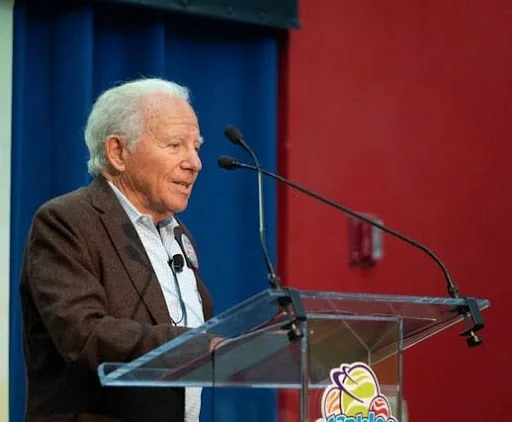
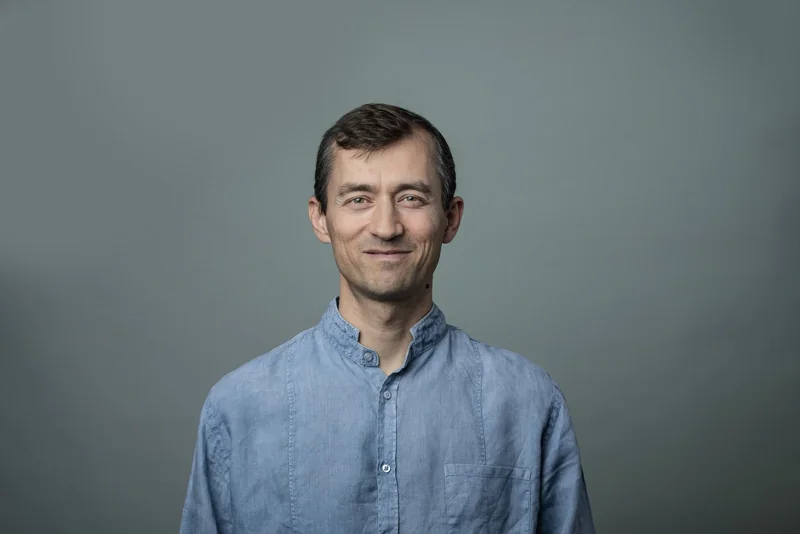
Portrait of Stuart Brown, psychiatrist and founder of the National Institute for Play

The psychiatrist of play

Stuart Brown

National Institute for Play

American psychiatrist, founder of the National Institute for Play. His interest began in 1966, when he studied for an official commission a life marked by a lack of play in childhood. Since then he has gathered more than six thousand “play histories” from all kinds of people.

The idea

In “Play” (2009) he argues that playing is a biological need, as tied to health as sleeping or eating, in adulthood too.

National Institute for Play ↗

Photo: National Institute for Play, with permission.

Other names worth knowing

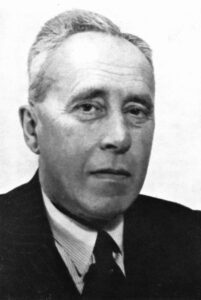
Johan Huizinga, Dutch historian and author of Homo Ludens

Johan Huizinga

“Homo Ludens” (1938): culture is born through play.

RC

Roger Caillois

Sociologist; “Man, Play and Games” (1958): four types of play.

WF

William Fry

Stanford psychiatrist, pioneer of gelotology.

Madan Kataria, creator of laughter yoga, in 2016

Madan Kataria

Indian doctor, creator of laughter yoga (1995).

Michael Christensen as Mr. Stubs the clown, 1987

Michael Christensen

Clown; founded the Clown Care Unit in 1986.

RP

Robert Provine

Neuroscientist; studied laughter as a social signal.

Robin Dunbar, evolutionary psychologist at the University of Oxford

Robin Dunbar

Evolutionary psychologist at Oxford; laughter, endorphins and bonding.

Jaak Panksepp, neuroscientist

Jaak Panksepp

Described rats’ “laughter” when they play (2003).

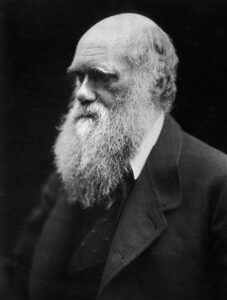
Charles Darwin photographed in 1868

Charles Darwin

Naturalist; described laughter as an expression shared with apes (1872).

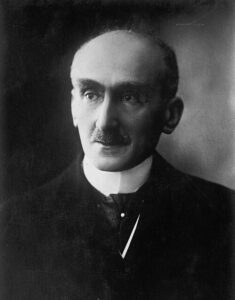
Henri Bergson, French philosopher and author of Laughter

Henri Bergson

Philosopher; “Laughter” (1900): we laugh in society.

Barbara Fredrickson, psychologist

Barbara Fredrickson

Psychologist; joy broadens our outlook and builds resources (2001).

Sophie Scott, neuroscientist at University College London

Sophie Scott

London neuroscientist; studies the social life of laughter.

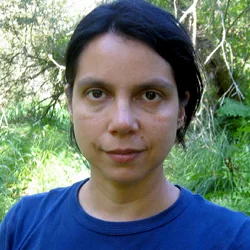
Portrait of Marina Davila-Ross, researcher of laughter in primates

Marina Davila-Ross

Primatologist; compared the laughter of babies and great apes (2009).

RM

Ramon Mora-Ripoll

Doctor; author of reviews on laughter in medicine (2010).

BC

Begoña Carbelo

University of Alcalá; humour and health in nursing care.

Portrait of Eduardo Jáuregui, author and trainer on humour

Eduardo Jáuregui

Author of “El sentido del humor: manual de instrucciones” (2007).

Wikimedia Commons: Huizinga, Darwin and Bergson, public domain; Kataria, Kimiyo Kawakami, CC BY-SA 4.0; Dunbar, Festival della Scienza, CC BY-SA 2.0; Panksepp, Andres Tennus (University of Tartu), CC BY-SA 3.0; Fredrickson, Gabriella Clare Marino, CC BY-SA 4.0; Scott, Sophiescott, CC BY-SA 3.0. With permission: Christensen (Circopedia), Davila-Ross (University of Portsmouth) and Jáuregui (author’s website).

Play and playfulness

And how do you play?

Stuart Brown describes eight “play personalities”. Most of us are a mix of several.

The joker

Plays with humour: jokes, silliness and clowning around.

The kinesthete

Plays by moving the body: dancing, walking, doing sport.

The explorer

Plays by discovering new places, ideas and sensations.

The competitor

Plays with rules and a scoreboard, or cheering from the stands.

The director

Plays by organising plans, parties and get-togethers.

The collector

Plays by gathering objects or experiences.

The artist

Plays by making and fixing things with their hands.

The storyteller

Plays with stories: listening to them, making them up and telling them.

Friends lying on the grass making a star with their hands

Ludic

From the Latin “ludus”, game: anything that belongs to play.

A right

Article 31 of the Convention on the Rights of the Child (1989) recognises the right to play.

11 June

International Day of Play, declared by the UN in 2024.

What science says

What has been measured and what’s still missing

Stress

−32%

Average drop in cortisol after laughter interventions. Meta-analysis of 8 studies and 315 people.

PLOS ONE, 2023 ↗

Company

×30

We laugh about thirty times more with other people than alone, almost always without a joke involved.

Provine, 2000 ↗

Pain tolerance

6 tests

In six experiments, people who had just laughed in a group tolerated pain better. The authors attribute it to endorphins, the body’s natural painkiller.

Proc. R. Soc. B, 2012 ↗

Brain

PET

A brain scan recorded more release of endogenous opioids after laughing in company.

J. Neurosci., 2017 ↗

More findings on laughter and joy

Origin

The laughter of babies and great apes when tickled shares the same structure, pointing to a common origin more than ten million years ago.

Current Biology, 2009 ↗

All cultures

Listeners from 24 societies could tell, better than chance, whether people laughing together were friends or strangers.

PNAS, 2016 ↗

Joy

Positive emotions broaden attention and help build lasting resources, according to Barbara Fredrickson’s theory.

American Psychologist, 2001 ↗

Mood

A meta-analysis of ten trials with 814 people found improvements in depression, anxiety and sleep quality.

J. Adv. Nurs., 2019 ↗

Grief

In bereaved people, genuine laughter when remembering their partner was linked to less anger and better social relationships.

J. Pers. Soc. Psychol., 1997 ↗

In the long term

In a follow-up of 17,152 adults in Japan, laughing less than once a month was associated with higher mortality. It’s an observed association that has yet to be explained.

J. Epidemiol., 2020 ↗

The limits

There’s a lot left to measure

Many studies are small, short and of uneven quality. Reviews see improvements in mood and call for larger trials. That’s why we talk about well-being and a complement.

Soc. Sci. Med., 2019 ↗

Types

Four ways of working with laughter

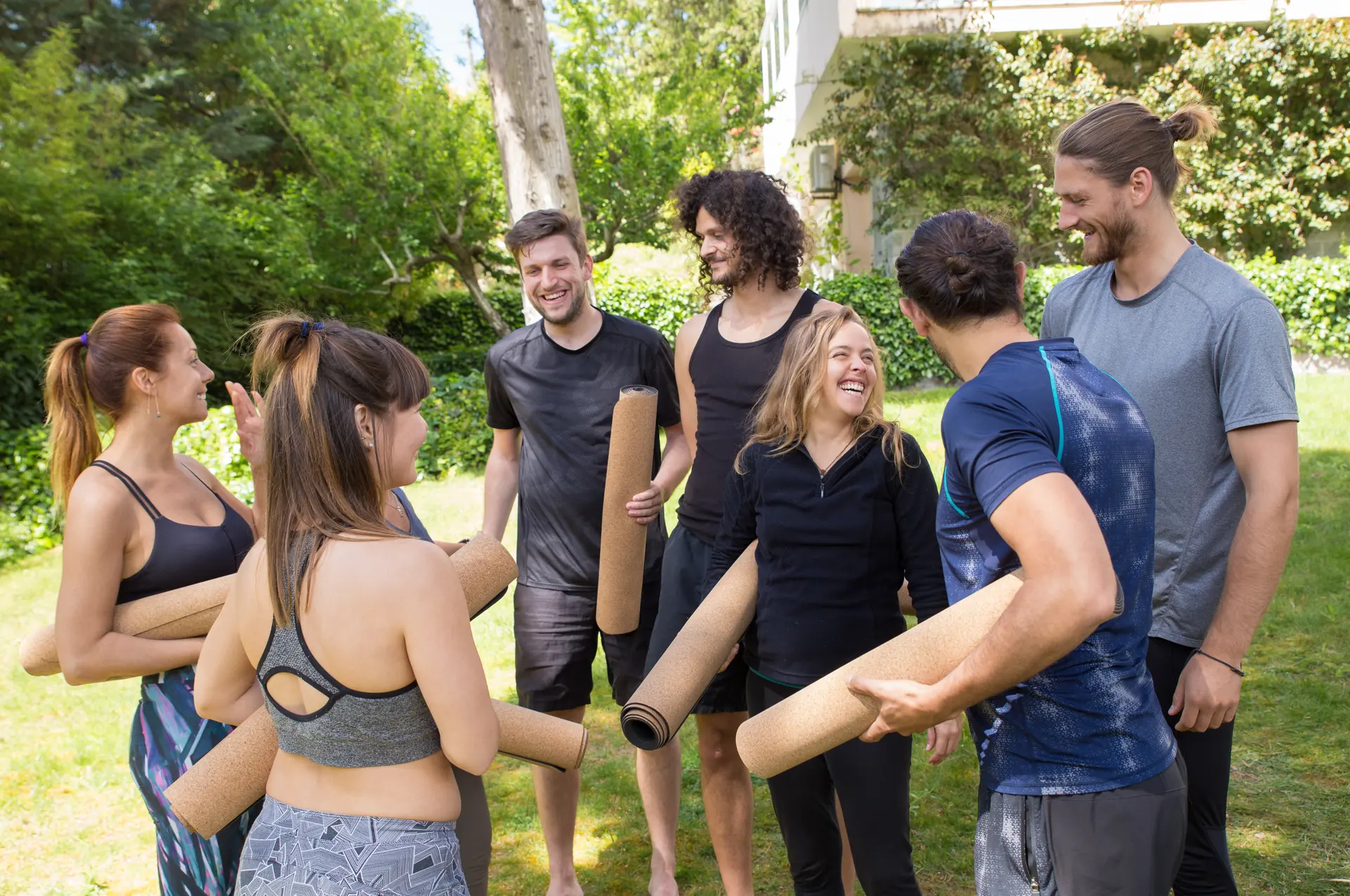
Group of people with mats chatting and laughing outdoors

1

Laughter Therapy Workshop

A group session with games and activities. Laughter comes through shared play.

What a workshop is like →

2

Laughter yoga

Laughter practised as exercise, without humour, combined with breathing. Created by Madan Kataria in 1995.

3

Hospital clowns

Professional performers who support patients, families and healthcare staff. In Spain since 1994.

4

Therapeutic humour

Guided use of humorous material by health professionals, as part of a treatment.

In practice

What happens in a session

A session lasts between 90 minutes and 2 hours and moves through five stages. Everyone takes part at their own pace.

1 · Arrive

2 · Connect

3 · Let go

4 · Laugh

5 · Integrate

See what a workshop is like →
Two people hug while the group applauds, sitting in a circle

FAQ

Questions about Laughter Therapy

Short answers to the most common questions.

It’s a group practice that uses games, movement and group exercises to trigger laughter and make the most of its effects on body and mood. It’s used as a well-being and team-bonding activity.

To release tension, improve mood and strengthen the bond between people in a group. Available studies point to a drop in cortisol, the stress hormone, and greater pain tolerance after laughing in company.

The best documented are short-term: less cortisol, a sense of well-being linked to endorphins and feeling closer to the group. Scientific reviews also note improvements in mood and call for larger studies to confirm them.

Laughter Therapy is a well-being complement. It goes alongside medicine and psychology, and any treatment is always decided by a health professional.

Laughter yoga, created by the doctor Madan Kataria in 1995, practises laughter as exercise, combined with breathing and without relying on humour. A Laughter Therapy Workshop is based mainly on play and group exercises.

The laughter in a workshop comes from shared play. Robert Provine’s research showed that most everyday laughter happens in ordinary conversations, between people who are comfortable together.

It’s the scientific study of laughter and its effects on body and mind. The term comes from the Greek “gelos”, laughter, and the field began in 1964 with the psychiatrist William Fry at Stanford University.

Yes. Hunter “Patch” Adams is an American doctor born in 1945, founder of the Gesundheit! Institute. The 1998 film is loosely based on his life, and he himself has criticised it for portraying him only as a funny doctor.

Introduction games, movement, pair and group exercises, and a calm close. On the Laughter Therapy Workshop page we explain it step by step.

Sources

Where each figure comes from

See the 22 sources cited
  1. Cousins N. Anatomy of an illness (as perceived by the patient). N Engl J Med. 1976;295:1458-1463.
  2. Mora-Ripoll R. The therapeutic value of laughter in medicine. Altern Ther Health Med. 2010;16(6):56-64.
  3. Kramer CK, Leitão CB. Laughter as medicine: systematic review and meta-analysis on laughter and cortisol. PLOS ONE. 2023;18(5):e0286260.
  4. Dunbar RIM et al. Social laughter is correlated with an elevated pain threshold. Proc R Soc B. 2012;279:1161-1167.
  5. Manninen S et al. Social laughter triggers endogenous opioid release in humans. J Neurosci. 2017;37(25):6125-6131.
  6. van der Wal CN, Kok RN. Laughter-inducing therapies: systematic review and meta-analysis. Soc Sci Med. 2019;232:473-488.
  7. Zhao J et al. A meta-analysis of randomized controlled trials of laughter and humour interventions on depression, anxiety and sleep quality in adults. J Adv Nurs. 2019;75(11):2435-2448.
  8. Davila-Ross M, Owren MJ, Zimmermann E. Reconstructing the evolution of laughter in great apes and humans. Curr Biol. 2009;19(13):1106-1111.
  9. Bryant GA et al. Detecting affiliation in colaughter across 24 societies. PNAS. 2016;113(17):4682-4687.
  10. Fredrickson BL. The role of positive emotions in positive psychology: the broaden-and-build theory of positive emotions. Am Psychol. 2001;56(3):218-226.
  11. Keltner D, Bonanno GA. A study of laughter and dissociation: distinct correlates of laughter and smiling during bereavement. J Pers Soc Psychol. 1997;73(4):687-702.
  12. Sakurada K et al. Associations of frequency of laughter with risk of all-cause mortality and cardiovascular disease incidence in a general population. J Epidemiol. 2020;30(4):188-193.
  13. Scott SK et al. The social life of laughter. Trends Cogn Sci. 2014;18(12):618-620.
  14. Provine RR. The science of laughter. Psychology Today, 2000; and “Laughter: A Scientific Investigation” (Viking, 2000).
  15. Panksepp J, Burgdorf J. «Laughing» rats and the evolutionary antecedents of human joy? Physiol Behav. 2003;79:533-547.
  16. Brown S, Vaughan C. «Play: How It Shapes the Brain, Opens the Imagination, and Invigorates the Soul» (Avery, 2009). National Institute for Play.
  17. Darwin C. “The Expression of the Emotions in Man and Animals” (1872). Bergson H. “Laughter” (1900). Huizinga J. “Homo Ludens” (1938). Caillois R. “Man, Play and Games” (1958).
  18. Adams P, Mylander M. «Gesundheit!» (Healing Arts Press, 1993). Gesundheit! Institute.
  19. Carbelo B. «El humor en la relación con el paciente» (Masson, 2005). Jáuregui E. «El sentido del humor: manual de instrucciones» (RBA, 2007).
  20. La Sonrisa Médica (Palma, 1994) and the Spanish Federation of Hospital Clowns (2018).
  21. United Nations. International Day of Play (resolution A/RES/78/268, 2024) and Convention on the Rights of the Child, article 31 (1989).
  22. Laughter Yoga International, founded by Madan Kataria (Mumbai, 1995).

Information page, reviewed October 2026. The people and institutions cited have no connection with Red Lúdica and do not endorse its services. This content does not replace advice from a health professional.

Portraits from Wikimedia Commons, cropped into circles: Patch Adams, photo by Craig Y. Fujii (file, CC BY-SA 3.0); Madan Kataria, photo by Kimiyo Kawakami (file, CC BY-SA 4.0); Robin Dunbar, photo by Festival della Scienza (file, CC BY-SA 2.0); Jaak Panksepp, photo by Andres Tennus, University of Tartu (file, CC BY-SA 3.0); Barbara Fredrickson, photo by Gabriella Clare Marino (file, CC BY-SA 4.0); Sophie Scott, photo by Sophiescott (file, CC BY-SA 3.0). In the public domain: Johan Huizinga (file), Charles Darwin, photo by Julia Margaret Cameron, 1868 (file), Henri Bergson, photo by Henri Manuel (file) and Norman Cousins (file).

Portraits used with permission: Stuart Brown (National Institute for Play), Michael Christensen (Circopedia), Marina Davila-Ross (University of Portsmouth) and Eduardo Jáuregui (author’s website). The rest are licensed stock photos.

About the word “therapy”. We use it in its everyday, non-clinical sense. Our workshops are wellbeing, play and team-cohesion activities; clinical interventions are the domain of healthcare professionals.

From words to action

Laughter Therapy makes more sense in a group

We’ll walk you through a workshop, step by step.

✓

Request received!

Thank you for telling us about your group. We’ll reply within 24 working hours with a tailored proposal.

Want to share more details or would you rather talk?

Three steps, one minute

Tell us about your group

We’ll help you shape the experience around your needs.